











Featured case study
Building an AI-Powered Wardrobe & Style Intelligence App
An AI-powered wardrobe intelligence app that helps people organize their clothing and understand their personal style.
Read the case study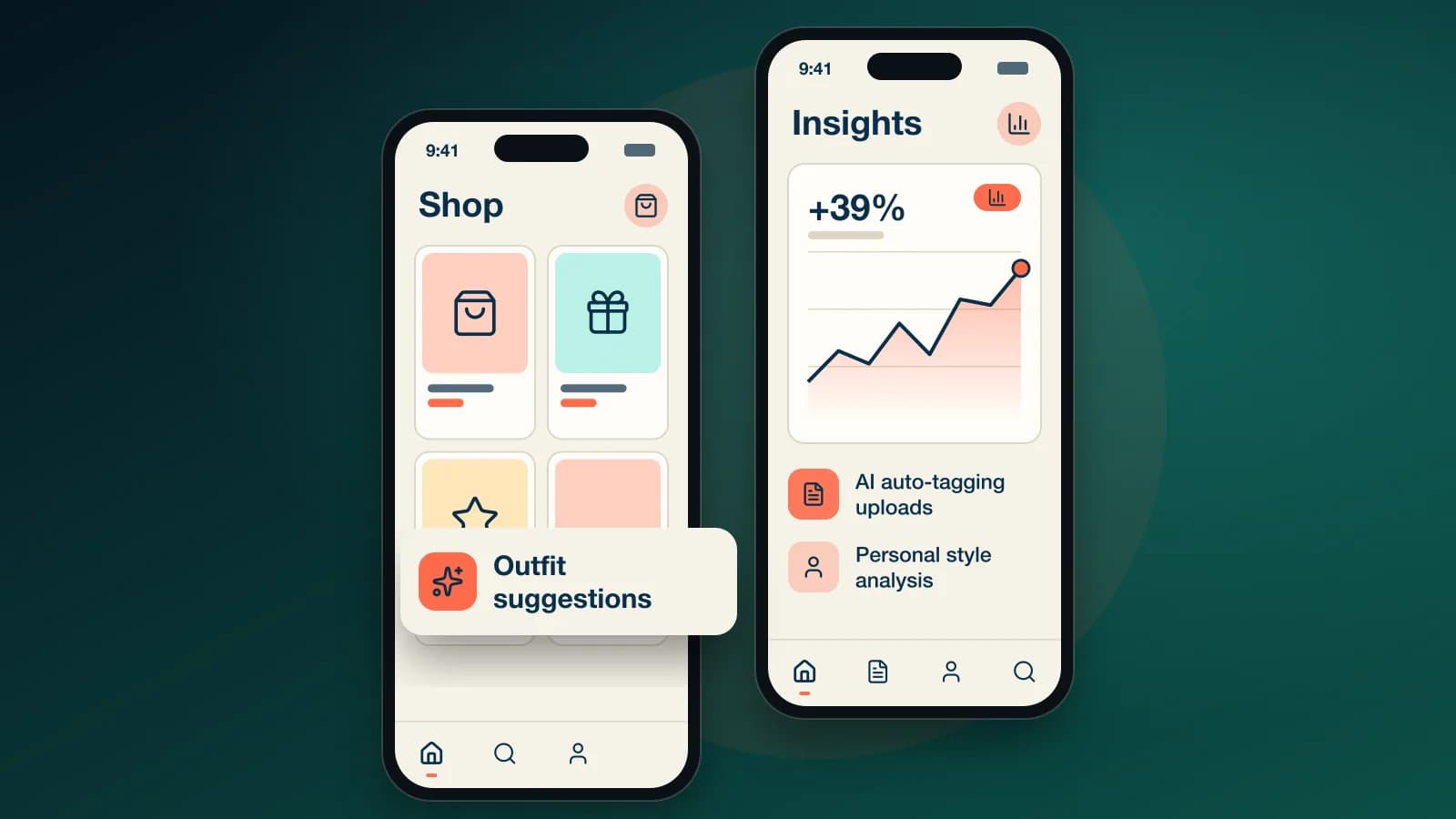
Connect Salesforce, HubSpot, Zoho, Odoo, SAP and NetSuite with your apps, store, data warehouse and AI.
Stack we work in
Figures as of Oct 2026
Trusted by
Most businesses run sales in a CRM, finance and stock in an ERP, and orders in an online store, with people copying data between them.
We connect these systems so records stay in sync, workflows run on their own, and your data is ready for reporting and AI. We work with Salesforce, HubSpot, Zoho CRM, Zoho Books, Zoho Bigin, Odoo, SAP S/4HANA, SAP Business One and Oracle NetSuite, using their APIs, integration platforms or custom middleware, depending on what fits your volume and budget.
Sales close a deal in the CRM, then someone re-enters the order and invoice in the ERP by hand.
Customer details, prices or stock levels differ between the CRM, ERP and online store, and nobody knows which is right.
A sync stops after an API change or expired token, and the gap is found weeks later.
Moving to a new CRM or ERP is overdue, but years of messy data make the move feel risky.
Reports are built by exporting spreadsheets, so AI and analytics projects never get clean data to work with.
Outcomes
A system map, data flow diagram and field mapping showing which system owns each piece of data.
Syncs and automations built on official APIs, an integration platform or custom middleware, tested in a sandbox first.
Record counts, checks and any exceptions from each migration run, signed off before cutover.
Sync logs, retry handling and alerts when a run fails or data does not match.
How each integration works, how to fix common errors and how to change mappings.
All integration code and platform configuration in your repositories and accounts.
Turn a won deal in Salesforce or HubSpot into an order and invoice in NetSuite, SAP or Zoho Books automatically.
Keep products, prices, stock and orders in step between Shopify or Magento and Odoo or SAP Business One.
Move from spreadsheets or an old CRM to HubSpot, Salesforce or Zoho with history and relationships intact.
Combine CRM, ERP and support data in a warehouse and report on it in Power BI.
Summarize accounts, suggest next steps and draft follow-up emails from CRM records.
Send sign-ups, bookings and usage events from your web or mobile app into your CRM in real time.
Keep customers, orders, invoices and stock consistent across systems.
Built with
Choose the right integration layer for your volume and budget.
Built with
Move to a new CRM or ERP without losing history.
Remove repeated manual steps between teams.
Use your customer and finance data for reporting and AI.
Built with
 Power BI
Field mapping, deduplication and conflict rules are written down and agreed with your team before anything syncs.
Record counts and spot checks on trial runs, a freeze window for cutover, and a rollback step so a bad migration is never final.
Retries, error alerts and a dashboard of every sync and every failure, so you know about problems before your customers do.
Make, Zapier, n8n, MuleSoft or Boomi where they fit, custom Node.js or Python middleware where volume or logic needs it, explained in writing.
Fixes when a connected system changes its API and monitoring of the integration are available under a support agreement with agreed response times.
Featured case study
An AI-powered wardrobe intelligence app that helps people organize their clothing and understand their personal style.
Read the case studyWe map your systems, data flows, manual steps and pain points with the people who use them, and check each system's API limits and licenses.
You receive System map and integration requirements
We decide what syncs where and how often, which system owns each field, how conflicts are handled, and whether an iPaaS or custom middleware fits best.
You receive Integration design and field mapping
We build the integrations in a sandbox, test them with real-looking data and edge cases, and review results with your team.
You receive Working integrations in sandbox
Where needed, we migrate historical data, then switch on the integrations in stages with monitoring in place.
You receive Live integrations and migration report
We watch sync logs and error alerts, fix issues, and add automation or AI features once the core data flows are stable.
You receive Runbook, dashboard and support plan
Tech stack
AI and machine learning
Data platforms
Pipelines and orchestration
 dbt
Databases
BI and analytics
Power BIBackend and APIs
Languages
Cloud and DevOps
CRM, commerce and CMS
Other tools
Engagement
A defined set of integrations or a migration, priced after discovery.
Connect your systems in stages, starting with the flow that saves the most manual work.
Monitoring, fixes, API updates and new automations under a monthly plan.
Cost depends on the number of systems and objects to sync, whether sync is one-way or two-way, data volume, data quality, any migration, and whether an integration platform or custom middleware is used. After discovery we quote a fixed price for the defined scope. Software licenses and platform fees are billed to your own accounts. As a guide, a single CRM integration usually costs $5,000 to $20,000, and a multi-system CRM and ERP program $20,000 to $100,000 or more (USD).
A single one-way sync between two systems often takes a few weeks. A two-way CRM and ERP integration with migration and automation is usually planned in phases over a few months. We agree the timeline after discovery.
Integration platforms are quick to set up and work well for moderate volumes and standard flows. Custom middleware suits high volumes, complex logic or strict cost control at scale. We recommend one after looking at your volumes, budget and who will maintain it, and often combine both.
Yes. We audit and clean the data, map objects and fields, run trial migrations with checks, and plan a cutover with a short freeze window. We also connect the new system to your other tools so nothing is left behind.
We agree which system owns each field before building. Conflicts follow those rules, and anything that cannot be resolved automatically goes to a review queue instead of overwriting data.
We use each platform's official APIs with the least access needed, keep credentials in a secrets store, encrypt data in transit, and log every sync. We design data flows to support GDPR and the data protection rules that apply in your country.
Yes. Once data is clean and connected, we can add lead scoring, forecasting, account summaries, email drafting or assistants that answer questions from your records. Our AI integration service covers this in more depth.
Every integration logs its runs and sends alerts on failure, with retries for temporary errors. We hand over a runbook, or support the integrations under a monthly plan that covers fixes and API changes.
Book a call, and we talk through the goal, the systems involved and any constraints under NDA. You then get a short written proposal with scope, timeline and estimate. We need admin or API access to the systems involved, the objects and fields to sync, expected volumes, and the person who owns the data in each system.
You do. Middleware code, platform workflows and documentation are handed over, and all data stays in your own CRM, ERP and cloud accounts. Work runs under NDA.
Book a call. We will map your systems and data flows and outline what to connect first.