












Featured case study
Building an AI-Powered Wardrobe & Style Intelligence App
An AI-powered wardrobe intelligence app that helps people organize their clothing and understand their personal style.
Read the case study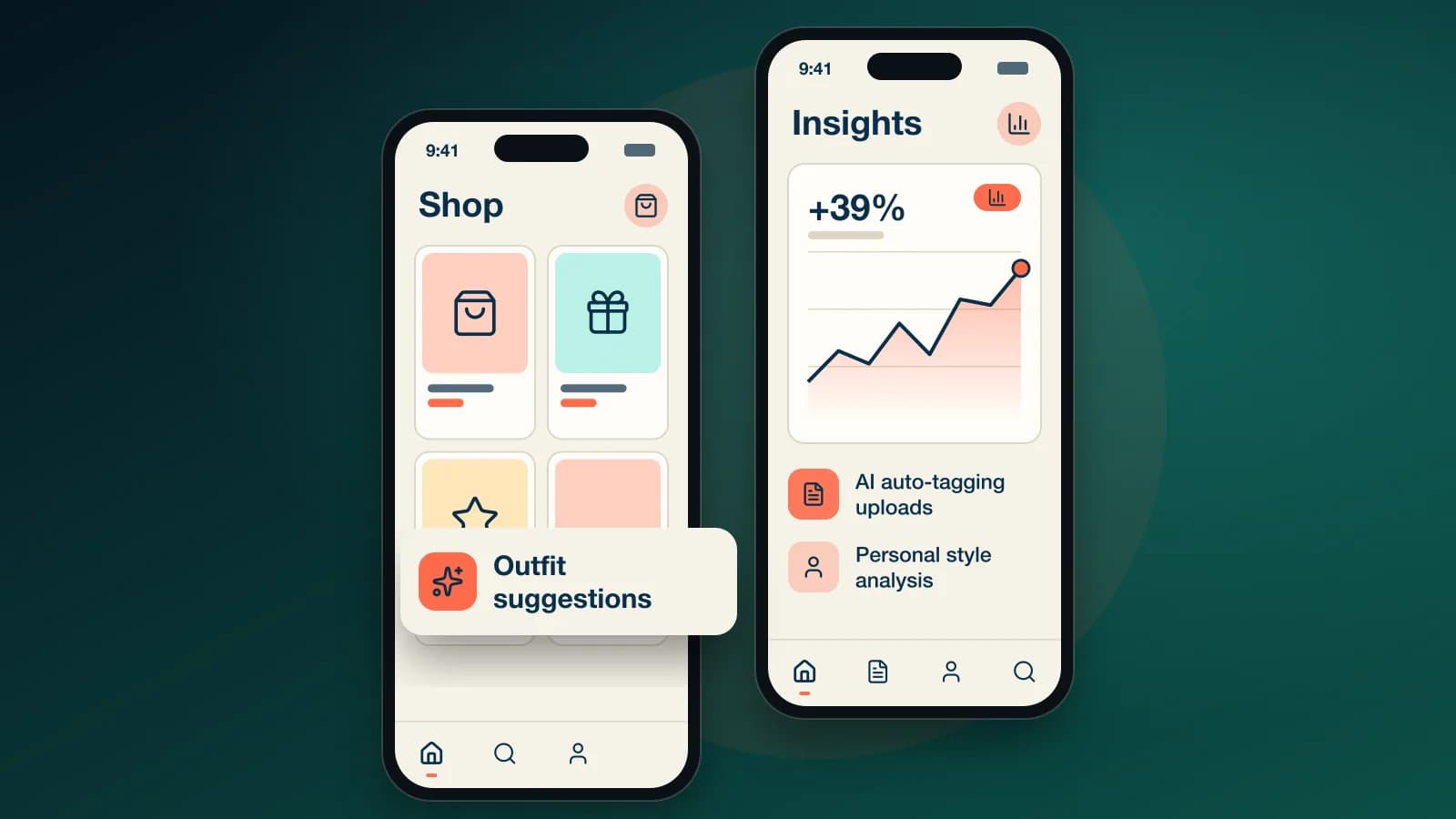
Policies, controls and records that let you use AI with confidence and show regulators you are in control.
Stack we work in
Figures as of Oct 2026
Trusted by
As AI moves into products and daily work, organizations need to know which systems they run, what risks they carry and who is accountable for them.
We help you set up practical AI governance: an inventory of AI systems, risk classification under the EU AI Act, policies and approval processes, technical controls such as logging, evaluation and human oversight, and documentation such as model cards and audit trails. We align the work with ISO/IEC 42001 and the NIST AI Risk Management Framework, and with UK and sector rules where they apply, so the effort counts toward certification and customer due diligence, not just a policy document.
Teams adopt AI tools and features faster than anyone can track.
Enterprise buyers ask detailed AI governance questions that slow or block deals.
EU AI Act duties are phasing in and it is unclear which systems they cover.
An AI policy exists, but nothing in the systems enforces or proves it.
Responsibility for AI risk sits between IT, legal, data and the business.
Outcomes
Every AI system and model with owner, purpose, data, vendor and risk class.
EU AI Act classification, impact assessments and mitigations per system.
AI policy, acceptable use, vendor review and incident procedures.
Position against the AI Act, ISO/IEC 42001 and NIST AI RMF, with a prioritized plan.
Logging, oversight, testing and monitoring added to priority systems.
Model cards, technical documentation and evidence ready for audits and customers.
Answer customer due diligence and meet provider duties for AI in your product.
Learn moreMeet high-risk requirements for AI used in hiring and workforce decisions.
Govern credit, fraud and customer AI under the AI Act and financial regulation.
Learn moreControl AI that touches patient data or clinical workflows.
Learn morePolicies and controls for staff use of Copilot, ChatGPT and internal assistants.
Gap analysis and implementation support ahead of a certification audit.
Know what AI you run and how risky it is.
Built with
Decide who approves what, and how.
Build toward recognized standards.
Built with
Put the policies into the systems.
Be ready when someone asks.
Built with
We write the policies and also implement the logging, oversight steps, guardrails and monitoring that make them true in production.
ISO/IEC 42001, NIST AI RMF, ISO/IEC 23894 and ISO 27001 alignment, with gap analysis you can act on.
Model cards, system cards, technical documentation and evidence packs ready for customer due diligence and regulators.
We are not a law firm. We work alongside your counsel and are explicit about where legal advice is needed.
Governance reviews are run by people who build AI systems, so controls fit how the systems actually work.
Featured case study
An AI-powered wardrobe intelligence app that helps people organize their clothing and understand their personal style.
Read the case studyWe find AI systems in use, including vendor tools and shadow AI, and collect existing policies.
You receive AI inventory
Each system is classified under the EU AI Act and assessed for risk and impact.
You receive Risk register
We compare current practice with the AI Act, ISO/IEC 42001 and NIST AI RMF.
You receive Gap report and plan
We draft policies, roles, approval workflows and the controls each risk level needs.
You receive Governance framework
We add logging, oversight, testing and documentation to priority systems.
You receive Controls and evidence
We set review cycles, metrics and audit readiness, and support you through audits.
You receive Ongoing governance plan
Tech stack
AI and machine learning
Data platforms
Pipelines and orchestration
Languages
Cloud and DevOps
Other tools
Next step
Governance needs test results. Our AI testing and red teaming service produces them.
It depends on how many AI systems you run, how many are high-risk, whether you build or only buy AI, the frameworks you want to align with and how much of the technical control work we do. As a guide, an AI inventory and gap assessment usually costs $8,000 to $20,000, and a full governance program with policies, controls and documentation $25,000 to $80,000 or more (USD).
It can. It applies to providers placing AI systems on the EU market and to deployers using AI in the EU, and in some cases to non-EU companies whose AI output is used in the EU. We check your role for each system.
The Act entered into force in August 2024. Bans on prohibited practices and AI literacy duties have applied since February 2025, and rules for general-purpose AI models since August 2025. Most high-risk obligations follow on a phased timetable that the EU has proposed to adjust, so we plan against the dates in force when we work with you.
Mainly use in areas listed in the Act, such as recruitment and HR, credit scoring, education, essential services, critical infrastructure and law enforcement, or AI that is a safety component of a regulated product. High-risk systems need risk management, data governance, documentation, logging, human oversight and accuracy controls.
The international standard for an AI management system. It sets out how an organization governs, develops and uses AI responsibly, and can be certified by an accredited body. It fits alongside ISO 27001 if you already have it.
Yes, though lighter. You still need an acceptable use policy, data handling rules, vendor review, staff AI literacy and a record of where AI is used. As a deployer you may also have AI Act duties for some uses.
No. We provide technical and operational governance work. For legal interpretation we work alongside your legal counsel or can recommend specialist firms.
Yes. As a development company we add logging, human approval steps, evaluation pipelines, guardrails and monitoring to your AI systems, so the evidence comes from the systems themselves.
An inventory and gap assessment usually takes 3 to 6 weeks. A full program with controls on priority systems typically takes 3 to 6 months.
Book a call, and we talk through the goal, the systems involved and any constraints under NDA. You then get a short written proposal with scope, timeline and estimate. We need a list of the AI systems and tools in use, who owns them, your existing policies, and access to the people who run the main use cases.
Yes. Regulation, models and your own use cases change, so we offer scheduled reviews, re-testing after model or data updates, and help keeping the AI register and evidence packs current.
Book a call. We will review your AI use and outline the governance and compliance steps that apply to you.