
Description
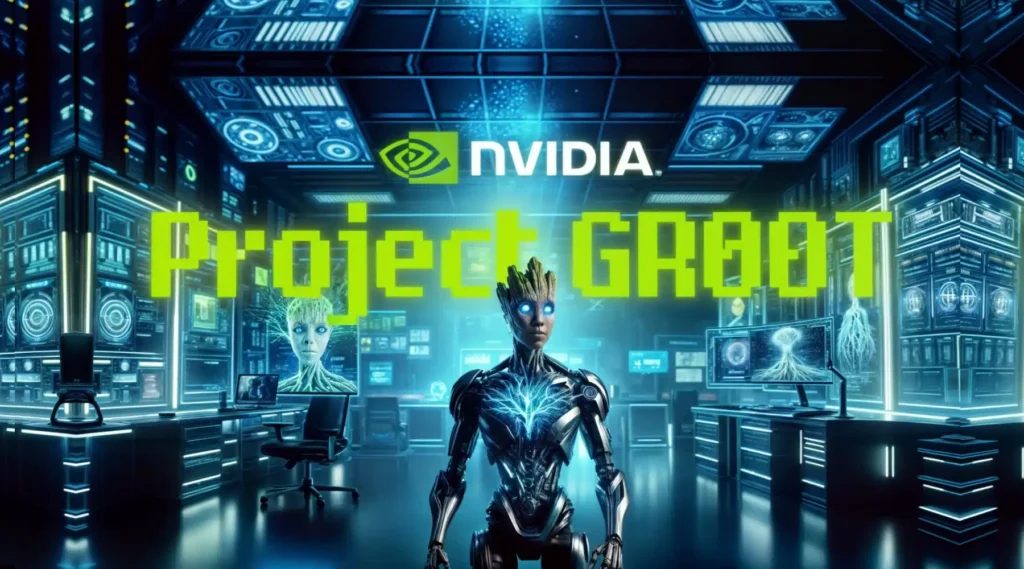
NVIDIA’s Project GR00T is an exciting endeavour with a big vision: to transform humanoid robotics as we know it. By harnessing NVIDIA’s powerful GPU and AI technologies, along with advancements in Mobile App Development, the project aims to push the boundaries of what robots can do, making them smarter and more human-like than ever before. Whether it’s improving their ability to move and handle objects or making interactions with them feel more natural and intuitive, Project GR00T is on a mission to redefine how we see and interact with robots, potentially bringing them closer into our everyday lives.
The Importance of Humanoid Robots
Humanoid robots hold immense potential to transform a wide range of industries and applications. Their ability to mimic human form and function allows them to navigate and interact with environments designed for people, opening up a world of possibilities. From assisting in hazardous or inaccessible environments to providing companionship and support for the elderly and disabled, humanoid robots can significantly enhance our capabilities and improve the quality of life for countless individuals.
Furthermore, the development of humanoid robots serves as a testbed for advancements in robotics, artificial intelligence, and human-machine interaction. The insights and breakthroughs achieved through these endeavors can have far-reaching implications, impacting fields as diverse as healthcare, education, and even space exploration.
- Enhanced Capabilities: Humanoid robots can navigate and interact with environments designed for humans, unlocking a wide range of applications.
- Improved Quality of Life: Humanoid robots can assist in hazardous environments, provide companionship, and support the elderly and disabled.
- Advancements in Technology: Humanoid robots serve as a testbed for innovations in robotics, AI, and human-machine interaction.
Key Advancements in Humanoid Robot Technology
Over the past decade, the field of humanoid robotics has witnessed remarkable advancements in various areas, including dexterity, locomotion, and autonomous decision-making. These developments have been driven by breakthroughs in fields such as computer vision, natural language processing, and advanced control systems.
- Dexterity Enhancements: Humanoid robots are now capable of performing intricate manual tasks, such as object manipulation, tool use, and complex motor skills. This enhanced dexterity is achieved through advanced actuation systems, sophisticated sensor integration, and precise control algorithms.
- Improved Locomotion: Humanoid robots have become increasingly adept at navigating various terrains and overcoming obstacles, thanks to advancements in bipedal locomotion, balance control, and dynamic motion planning.
- Autonomous Decision-Making: Humanoid robots are now equipped with advanced cognitive capabilities, enabling perception, informed decisions, and adaptive behaviour via computer vision, deep learning, and multi-agent collaboration.
NVIDIA’s Approach to Accelerating Humanoid Robots
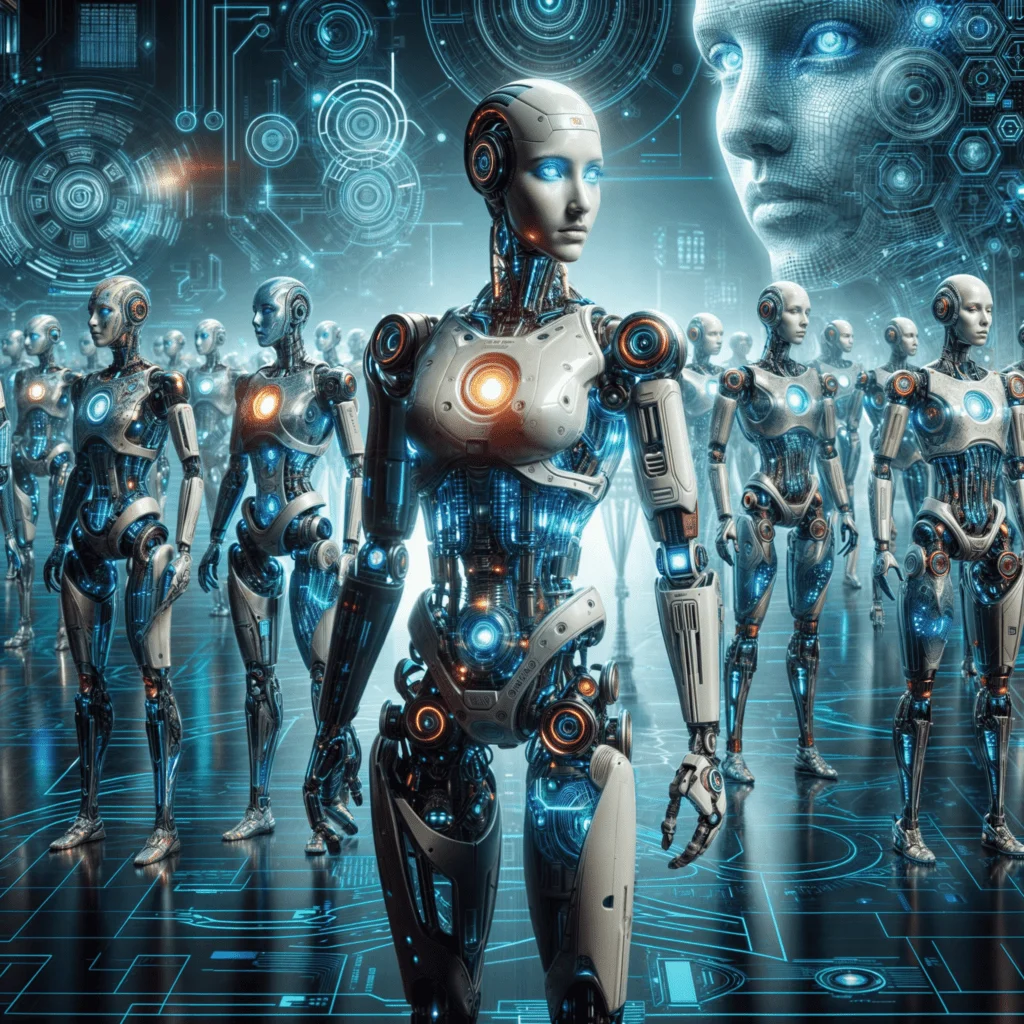
NVIDIA’s Project GR00T is taking a comprehensive approach by leveraging GPU-accelerated computing and state-of-the-art AI algorithms to tackle key challenges in humanoid robotics.
- Simulation-based Development: Using NVIDIA’s Omniverse platform for realistic virtual environments to prototype and test designs rapidly and cost-effectively.
- AI-Powered Perception and Control: Integrating AI capabilities like computer vision, natural language processing, and reinforcement learning to enable perception, interaction, and autonomous decisions.
- Hardware Optimization: Utilizing NVIDIA’s GPU-accelerated platforms to enable real-time, low-latency control and processing for responsive humanoid robots.
Leveraging NVIDIA’s GPU and AI Capabilities
At the heart of Project GR00T’s approach is the integration of NVIDIA’s GPU and AI technologies to handle complex algorithms and real-time processing demands.
- GPU Acceleration: Powering real-time, low-latency control and processing for humanoid robots.
- AI-Powered Perception: Enabling understanding of surroundings and natural human-robot interaction.
- Simulation-based Development: Rapid prototyping/testing of robot designs and control in virtual environments via Omniverse.
- Hardware Optimization: Optimized hardware/software stack for enhanced control and processing capabilities.
Challenges and Obstacles Overcome by Project GR00T
Developing humanoid robots capable of seamless integration with human environments is challenging. Project GR00T has addressed key obstacles:
- Dexterity and Manipulation: Advancements in actuation, sensor integration, and control algorithms for precise, responsive movements.
- Locomotion and Balance: Breakthroughs in dynamic motion planning and balance control for navigating complex terrains.
- Autonomous Decision-Making: Enhanced perception, understanding, and decision-making via AI advancements.
Conclusion and Future Outlook
Project GR00T’s work has the potential to transform industries and how we interact with intelligent machines. Leveraging NVIDIA’s GPU and AI power, the project overcomes major challenges and leads toward a future where humanoid robots enhance daily life, capabilities, and push robotics boundaries.
As the project evolves, expect continued advancements in dexterity, autonomy, and natural interaction, impacting disaster response, healthcare, education, and beyond. With Project GR00T at the forefront, the future of humanoid robotics looks brighter than ever.
If you want to learn more about exciting new technology, keep an eye on our website for future updates and discoveries in the tech world.