
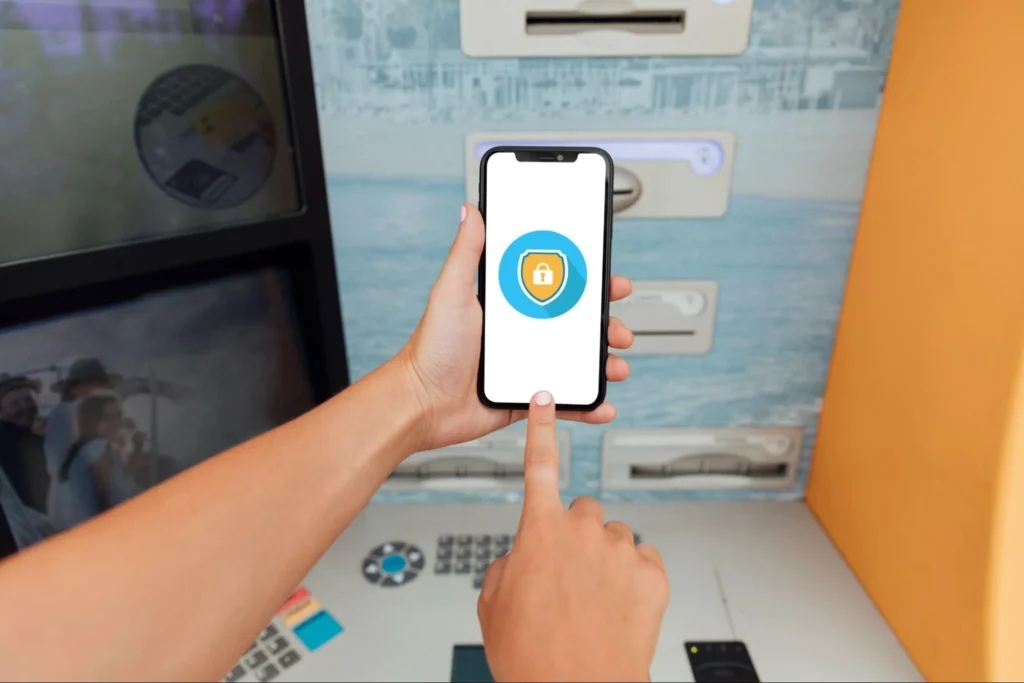
Smart locker systems are becoming an essential part of modern operations across logistics, healthcare, retail, corporate offices, manufacturing, and public infrastructure. While locker hardware is the most visible component, the true intelligence of an IoT smart locker system comes from the software that controls it.
Mobile applications and backend platforms are the foundation that makes lockers automated, secure, scalable, and easy to manage. Without them, lockers remain simple storage units. With them, lockers become a connected digital system that improves efficiency and control.
What Is an IoT-Based Smart Locker System?
An IoT smart locker system is a connected storage solution where physical lockers are controlled and monitored through software using internet connectivity.
Instead of manual keys or on-site supervision, the system operates through:
- Smart locker software
- A smart locker mobile app
- A centralized smart locker backend platform
- IoT-enabled locker hardware
This setup allows lockers to be accessed, managed, and tracked remotely from a single platform, even across multiple locations.
Why Smart Locker Software Is More Important Than Hardware
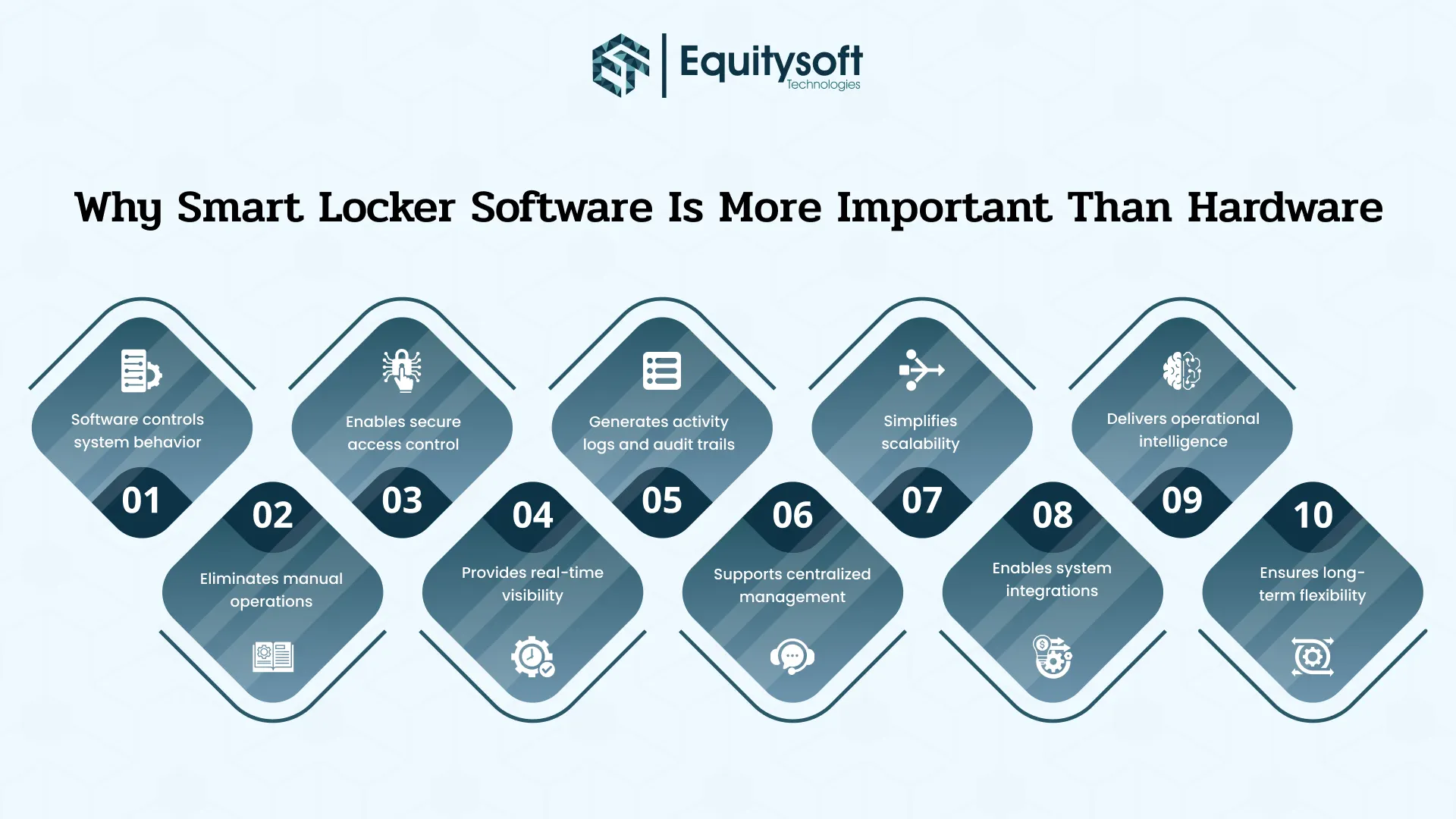
1. Software controls system behavior
Locker hardware only provides physical compartments, while smart locker software defines how lockers operate, who can access them, and when access is allowed.
2. Eliminates manual operations
Without software, locker access requires manual handling or supervision. Smart locker software automates access, allocation, and usage rules.
3. Enables secure access control
Software manages authentication methods such as QR codes, OTPs, PINs, RFID, or mobile-based access, ensuring only authorized users can open lockers.
4. Provides real-time visibility
Smart locker software allows live monitoring of locker status, occupancy, door activity, and system health from a centralized platform.
5. Generates activity logs and audit trails
Every locker interaction is recorded by the locker management system, improving accountability, traceability, and compliance.
6. Supports centralized management
Multiple locker locations can be managed from one backend system, making large deployments easy to control and maintain.
7. Simplifies scalability
Adding new lockers or locations is straightforward with software-driven configurations, without redesigning hardware workflows.
8. Enables system integrations
Smart locker software allows integration with logistics systems, ERP platforms, HR tools, healthcare software, and delivery workflows.
9. Delivers operational intelligence
Usage data and analytics help optimize locker utilization, reduce downtime, and improve overall efficiency.
10. Ensures long-term flexibility
Custom smart locker development allows the system to adapt to changing requirements, while hardware remains fixed and limited.
Our Role as a Smart Locker Technology Partner
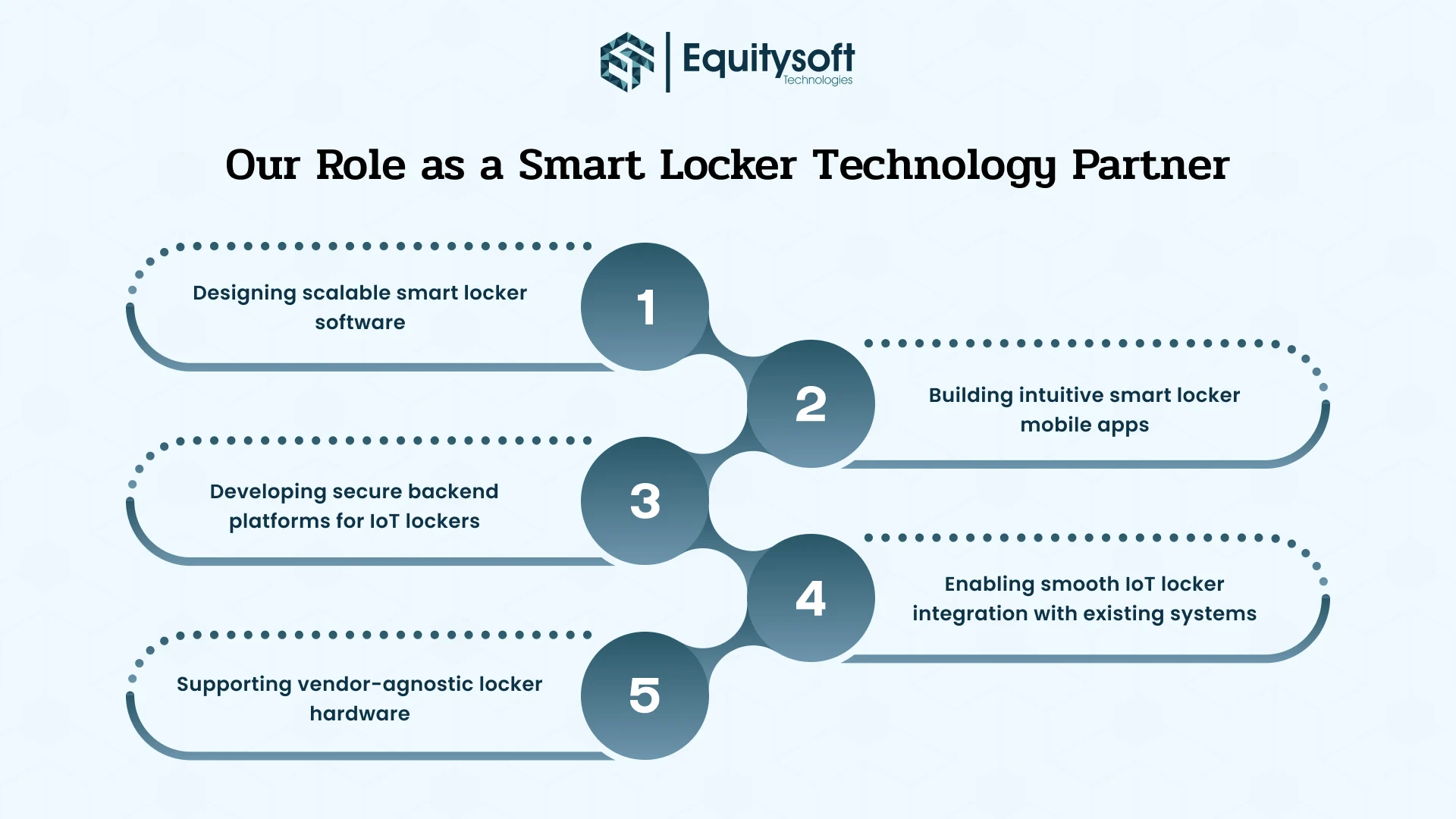
A successful smart locker system is not achieved by hardware installation alone. It requires a technology-first, software-driven approach that ensures lockers operate reliably, scale smoothly, and integrate seamlessly into existing digital ecosystems. As a smart locker technology partner, the focus is on building the intelligence behind the lockers—not just deploying physical units.
As a smart locker solution provider, this role includes:
1. Designing scalable smart locker software
Developing a robust locker management system that can support growing user bases, increasing locker volumes, and multi-location deployments without performance or security issues.
2. Building intuitive smart locker mobile apps
Creating user-friendly mobile applications that allow easy locker access, real-time notifications, secure authentication, and a smooth contactless experience.
3. Developing secure backend platforms for IoT lockers
Building centralized backend platforms that act as the control center for all locker operations, handling access rules, device communication, data storage, and system analytics securely.
4. Enabling smooth IoT locker integration with existing systems
Ensuring lockers integrate effortlessly with enterprise systems such as logistics platforms, ERP solutions, facility management software, or healthcare systems through APIs and middleware.
5. Supporting vendor-agnostic locker hardware
Designing software that works with different locker manufacturers and hardware configurations, avoiding dependency on a single vendor and allowing future hardware flexibility.
This technology-partner approach ensures flexibility, long-term scalability, and operational reliability, transforming smart lockers into a future-ready digital infrastructure rather than a fixed hardware deployment.
How IoT-Integrated Smart Locker Systems Are Built
To understand how smart locker systems work, it helps to look at the IoT based locker system architecture, which consists of three main layers.
1. Hardware Layer
This layer includes:
- Locker cabinets
- Electronic locks
- Door sensors
- IoT controllers and connectivity
The hardware performs physical actions such as opening and closing lockers.
2. Backend Platform Layer
The smart locker backend platform acts as the control center. It:
- Communicates with locker hardware
- Processes access requests
- Manages users and permissions
- Stores activity and usage data
- Generates reports and insights
This layer ensures that lockers operate reliably and securely.
3. Application Layer
The application layer includes:
- Mobile app for smart lockers
- Web dashboards for administrators
- Notification and alert systems
Users interact with lockers entirely through this layer, making usability and reliability critical.
Software-Driven Actions in Smart Locker Systems
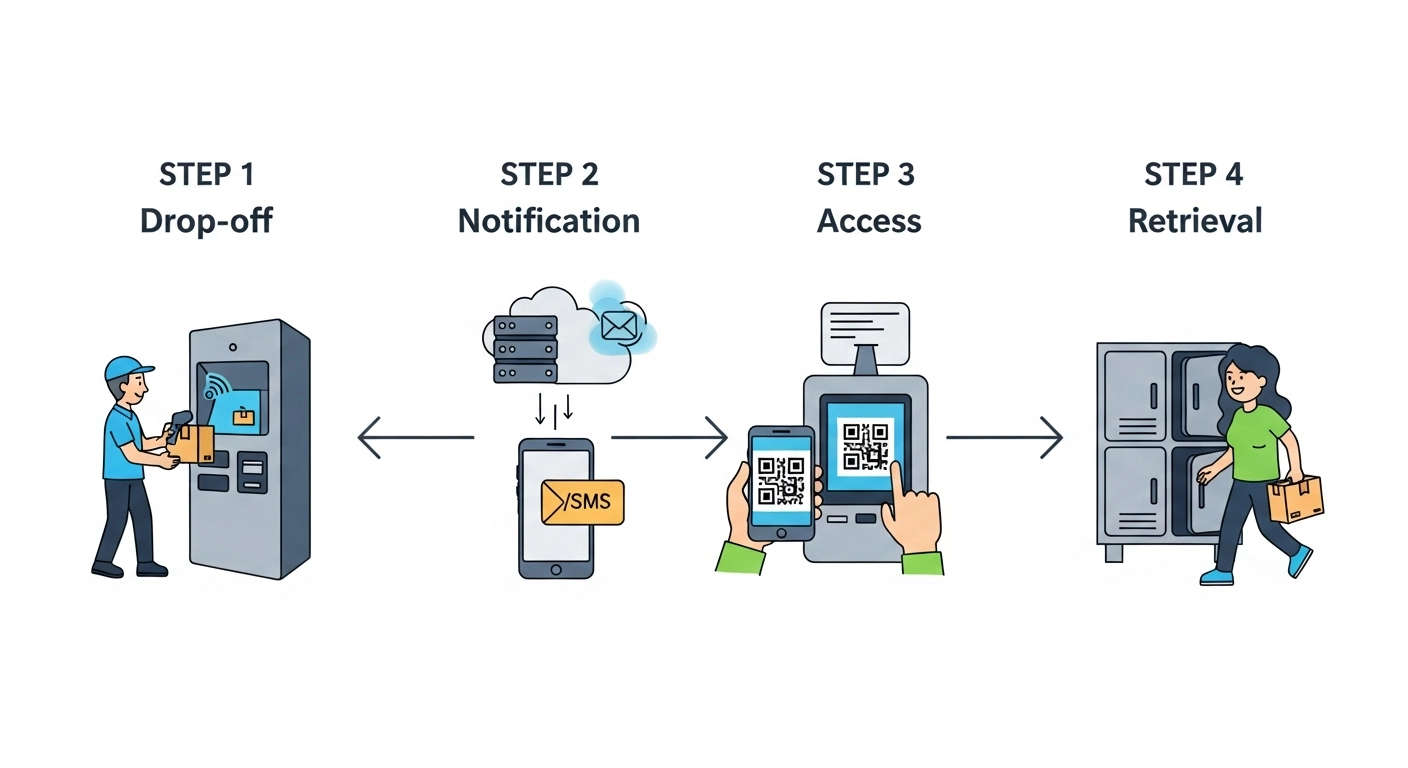
In modern IoT-based smart locker systems, most operational tasks are handled entirely through software. Instead of relying on manual supervision or physical intervention, IoT locker integration enables lockers to respond automatically to digital commands and predefined rules. This software-driven approach ensures speed, accuracy, and consistent operation across all locations.
Key actions managed through smart locker software include:
1. QR code or OTP-based access
Users receive secure, time-bound QR codes or one-time passwords generated by the system, allowing controlled and contactless locker access.
2. Time-based locker permissions
Access rights can be limited to specific time windows, ensuring lockers automatically lock or unlock only during authorized periods.
3. Automatic locker allocation
The system assigns lockers dynamically based on availability, size requirements, or workflow rules, eliminating manual selection.
4. Remote lock and unlock
Lockers can be opened or secured remotely through the backend platform or mobile app, without on-site involvement.
5. Delivery and pickup confirmations
The system automatically records successful deliveries and collections, triggering status updates and notifications.
6. Real-time notifications
Users and administrators receive instant alerts for locker access, delivery completion, pickup reminders, or exceptions.
Every software-driven action is recorded by the locker management system, creating detailed logs and audit trails. This ensures full transparency, improves accountability, and provides valuable insights into locker usage and system performance.
Scalability Through Vendor-Agnostic Architecture
A key requirement for large deployments is the ability to scale without restrictions.
Vendor-agnostic smart locker architecture allows:
- Integration with multiple locker hardware manufacturers
- Easy expansion to new locations
- Centralized management of large locker networks
- Future upgrades without replacing existing hardware
This flexibility is a major advantage of custom smart locker development.
Industries Using IoT-Based Smart Locker Solutions
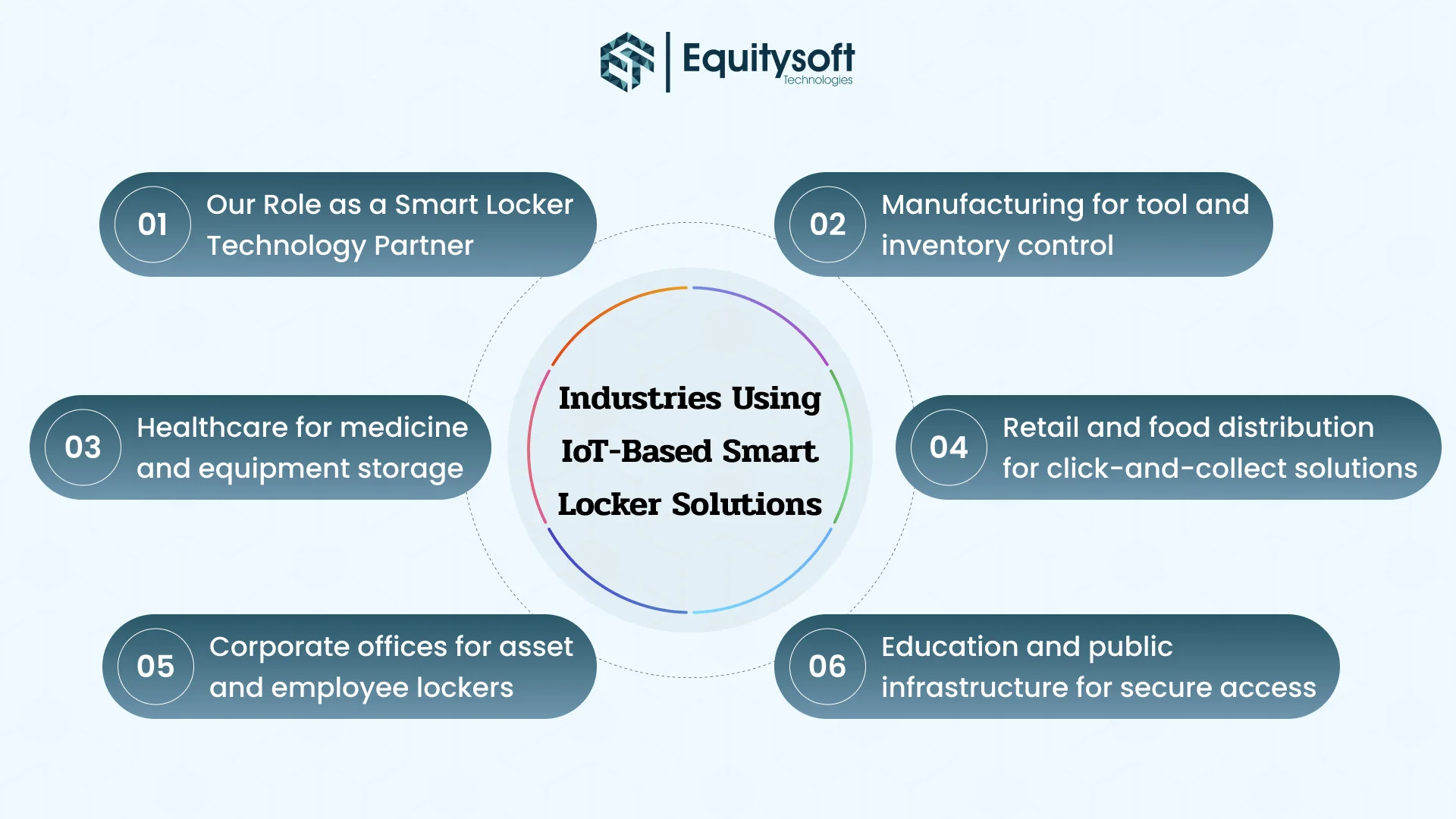
IoT-based smart locker systems are widely adopted across multiple industries because they offer a flexible, software-driven way to manage secure storage and controlled access. While the core technology remains the same, each industry adapts the smart locker system to match its specific workflows, security requirements, and operational scale.
Key industries using IoT-based smart locker solutions include:
1. Logistics and e-commerce for parcel management
Smart lockers automate parcel drop-offs and pickups, reduce delivery failures, and enable 24/7 access without manual coordination.
2. Healthcare for medicine and equipment storage
Lockers ensure controlled access to medicines, medical devices, and sensitive supplies, while maintaining traceability and compliance.
3. Corporate offices for asset and employee lockers
Organizations use smart lockers to manage laptops, documents, ID cards, and personal belongings with secure, contactless access.
4. Manufacturing for tool and inventory control
Smart lockers help track tools, components, and spare parts, reducing loss and ensuring accountability on the production floor.
5. Retail and food distribution for click-and-collect solutions
Lockers support order pickup, food distribution, and last-mile delivery by enabling fast, self-service collection.
6. Education and public infrastructure for secure access
Schools, universities, and public spaces use smart lockers to provide safe, managed access to shared resources and materials.
Across all these sectors, the same IoT smart locker system architecture is used, with software configurations tailored to meet industry-specific operational needs.
Why Organizations Choose a Software-First Smart Locker Approach
A software-first smart locker approach places intelligence, control, and adaptability at the center of the system, instead of being limited by fixed hardware capabilities. While hardware enables physical storage, it is the smart locker software that determines how efficiently, securely, and flexibly the system operates over time.
Organizations choose this approach because it delivers long-term operational value rather than a one-time hardware deployment.
Key advantages of a software-first smart locker system include:
1. Centralized system management
All lockers, users, and locations are controlled from a single backend platform, simplifying administration and reducing operational effort.
2. Better security and compliance
Software-driven access rules, authentication methods, and audit logs ensure secure usage and support regulatory and compliance requirements.
3. Easy system integrations
Smart locker software integrates seamlessly with existing business systems such as logistics platforms, ERP software, HR tools, or healthcare systems.
4. Real-time operational visibility
Live dashboards and reports provide instant insights into locker status, usage patterns, and system performance.
5. Long-term scalability and cost efficiency
New lockers, locations, and features can be added through software updates without redesigning the entire system, reducing future costs.
With this approach, smart locker software evolves into a digital platform—one that continuously adapts to changing operational needs—rather than remaining a fixed, one-time installation tied to specific hardware.
Conclusion
An IoT smart locker system is defined by its software, not just its physical lockers. While hardware provides storage, it is the smart locker software, mobile applications, and backend platforms that deliver automation, security, scalability, and real operational control.
A software-first, vendor-agnostic approach ensures that smart locker systems remain flexible, easy to manage, and ready for future expansion across locations and industries. With the right architecture, lockers become intelligent digital assets rather than isolated storage units.
At Equitysoft Technologies, smart locker solutions are built with a strong focus on custom smart locker development, seamless IoT locker integration, and scalable backend platforms. By combining robust smart locker software with intuitive mobile apps and reliable system architecture, Equitysoft enables organizations to deploy future-ready IoT-based smart locker systems that grow alongside their business needs.
Frequently Asked Questions
Get answers to common questions about AI in eCommerce