
Artificial Intelligence is changing the way businesses communicate and interact with customers. In 2026, AI chatbots have become one of the most powerful tools for improving customer service, increasing efficiency, and driving business growth. Companies across industries are using intelligent chatbots to automate interactions, handle customer queries, and provide personalized experiences around the clock.
Whether you run an eCommerce store, a service-based company, or a large enterprise, AI chatbots can significantly improve your operations and customer engagement. In this blog, we will explore the top benefits of AI chatbots for businesses in 2026 and why organizations are rapidly adopting this technology.
What is an AI-Driven Chatbot?
An AI-driven chatbot is an intelligent software application that uses artificial intelligence technologies such as Natural Language Processing (NLP), Machine Learning (ML), and Large Language Models (LLMs) to understand and respond to human conversations.
Unlike traditional rule-based chatbots that follow predefined scripts, AI-driven chatbots can understand context, learn from interactions, and provide more accurate and human-like responses.
These chatbots are designed to simulate real conversations and assist users by answering questions, solving problems, recommending products, or guiding them through services.
The Benefits of AI Chatbots for Businesses
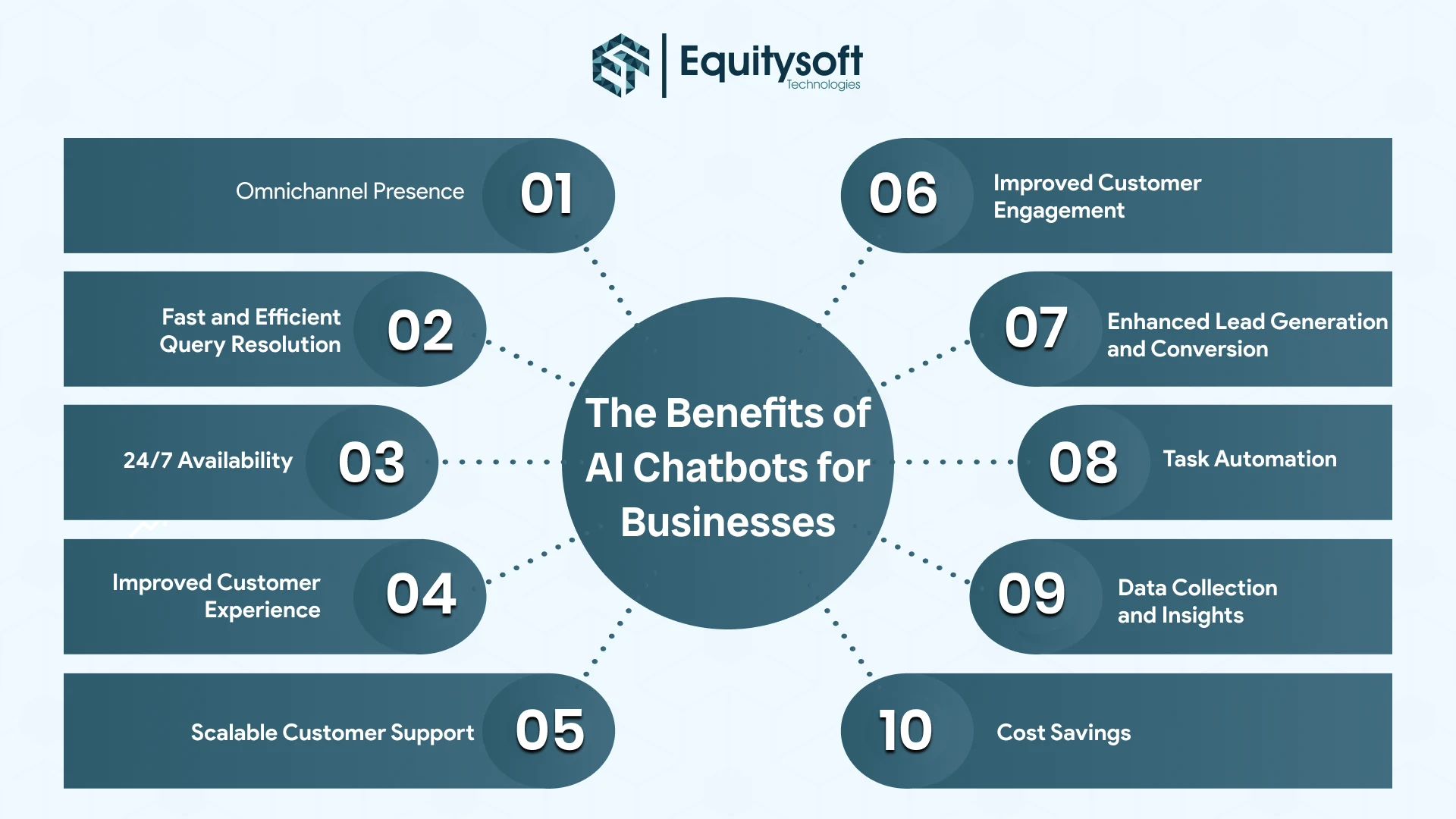
AI chatbots are transforming how businesses interact with customers, automate tasks, and improve service efficiency. By integrating intelligent chatbot solutions into websites, mobile apps, and messaging platforms, companies can streamline communication and deliver faster, more personalized experiences.
Here are some of the key benefits of AI chatbots for businesses.
1. Omnichannel Presence
AI chatbots allow businesses to communicate with customers across multiple platforms, including websites, mobile apps, WhatsApp, Facebook Messenger, and social media channels. This omnichannel presence ensures customers receive consistent support wherever they interact with the brand.
2. Fast and Efficient Query Resolution
Chatbots can instantly respond to customer inquiries and resolve common questions without delays. This reduces waiting times and improves overall service efficiency while allowing businesses to handle a large number of conversations simultaneously.
3. 24/7 Availability
Unlike human support teams, AI chatbots can operate around the clock. They provide continuous customer support, ensuring users get assistance anytime, even outside business hours.
4. Improved Customer Experience
AI chatbots enhance the customer journey by providing quick answers, personalized recommendations, and smooth interactions. Faster responses and accurate information lead to higher customer satisfaction.
5. Scalable Customer Support
As businesses grow, customer inquiries also increase. Chatbots help scale customer support operations by managing thousands of conversations at once without increasing operational costs.
6. Improved Customer Engagement
AI chatbots engage users through interactive conversations, guiding them through services, answering questions, and recommending products. This helps businesses build stronger relationships with their customers.
7. Enhanced Lead Generation and Conversion
Chatbots can capture visitor information, qualify leads, and guide potential customers through the sales funnel. This helps businesses generate more leads and convert website visitors into paying customers.
8. Task Automation
AI chatbots automate repetitive tasks such as answering FAQs, booking appointments, collecting customer information, and tracking orders. Automation saves time and allows employees to focus on more strategic work.
9. Data Collection and Insights
Chatbots collect valuable data from customer interactions, including preferences, frequently asked questions, and behavior patterns. Businesses can use this information to improve services, marketing strategies, and decision-making.
10. Cost Savings
By automating customer interactions and reducing the need for large support teams, AI chatbots help businesses significantly reduce operational costs while maintaining high-quality customer service.
How Do Chatbots Work?
Chatbots work by using a combination of Artificial Intelligence (AI), Natural Language Processing (NLP), and Machine Learning (ML) to understand user queries and provide relevant responses. They are designed to simulate human conversations and help users get information, solve problems, or complete tasks quickly.
When a user sends a message to a chatbot through a website, mobile app, or messaging platform, the chatbot analyzes the message, understands the intent behind it, and then delivers the most appropriate response.
Step-by-Step Process of How Chatbots Work
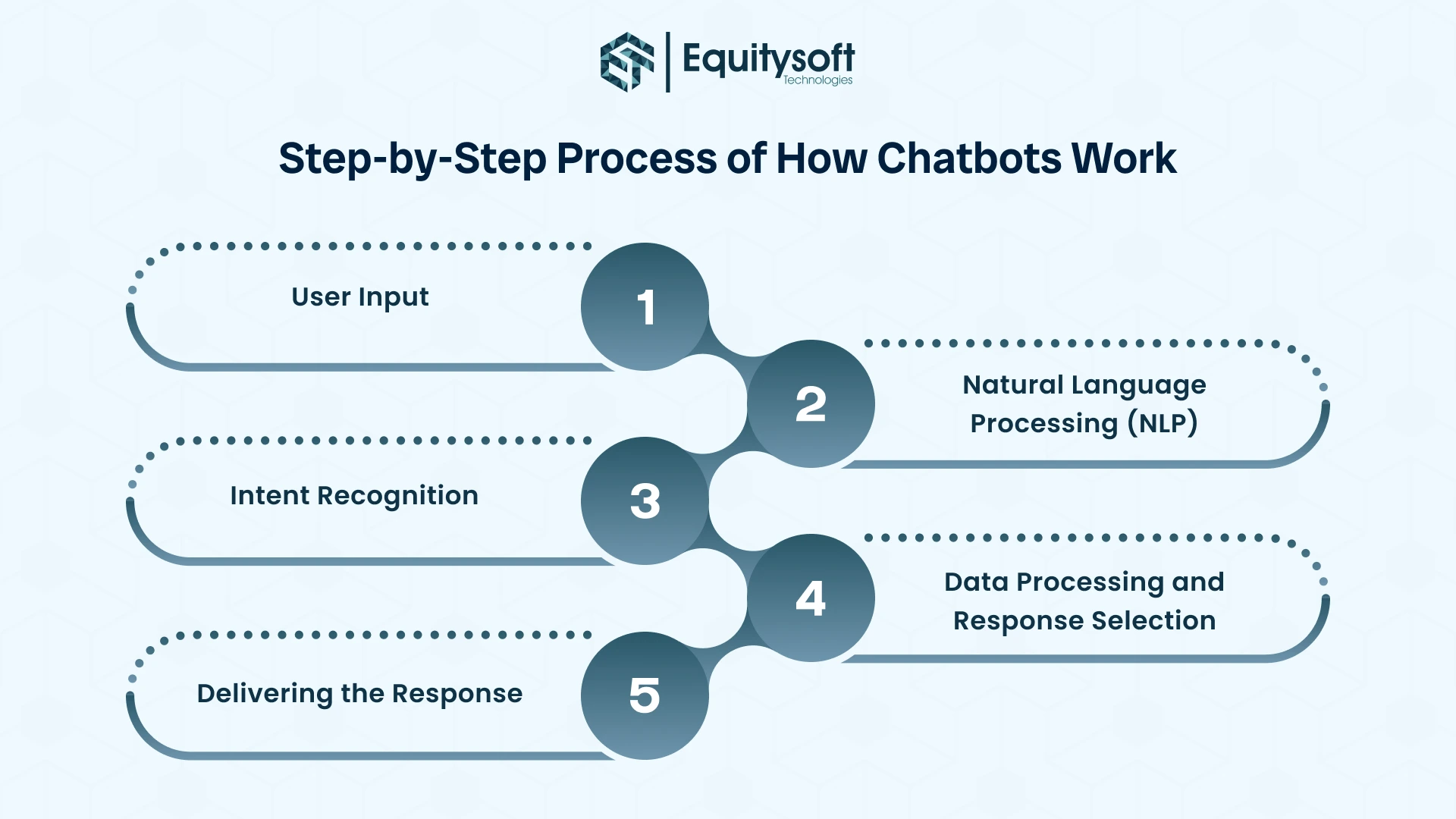
1. User Input
The process begins when a user types a message or asks a question through a chat interface.
For example:
- “What are your business hours?”
- “Track my order”
- “I want to book an appointment”
The chatbot receives this input and prepares it for processing.
2. Natural Language Processing (NLP)
The chatbot uses Natural Language Processing to analyze and understand the user’s message.
NLP helps the chatbot:
- Identify keywords in the message
- Understand the intent of the question
- Interpret the context of the conversation
This allows the chatbot to understand what the user is trying to ask.
3. Intent Recognition
Once the message is analyzed, the chatbot identifies the intent behind the user’s query.
For example:
- Intent: Check order status
- Intent: Ask for product information
- Intent: Contact customer support
Understanding intent helps the chatbot determine the correct response.
4. Data Processing and Response Selection
After identifying the intent, the chatbot retrieves the most relevant answer from its knowledge base, database, or pre-trained AI model.
The chatbot may:
- Provide a direct answer
- Offer multiple options to the user
- Redirect the query to a human support agent if needed
5. Delivering the Response
Finally, the chatbot sends the response back to the user through the chat interface.
The response may include:
- Text messages
- Product suggestions
- Links or resources
- Interactive buttons or menus
This ensures the user gets quick and helpful assistance.
Types of Chatbots
Businesses typically use two main types of chatbots.
1. Rule-Based Chatbots
Rule-based chatbots follow predefined rules and scripts. They can only respond to specific commands or keywords and are suitable for handling simple queries.
2. AI-Powered Chatbots
AI-powered chatbots use machine learning and NLP to understand complex queries, learn from conversations, and provide more natural responses. These chatbots improve over time and deliver more intelligent interactions.
Example of Chatbot Interaction
User: “I want to know the price of your services.”
Chatbot: “Sure! Could you please tell me which service you’re interested in?”
User: “Website development.”
Chatbot: “Our website development services start from $2,000. Would you like to schedule a consultation?”
This type of interaction helps businesses automate customer communication while providing quick and helpful responses.
Why Chatbots Are Important for Businesses
By automating conversations, chatbots help businesses:
- Provide instant customer support
- Handle multiple conversations simultaneously
- Reduce support costs
- Improve customer satisfaction
- Increase lead generation and conversions
As AI technology continues to evolve, chatbots are becoming smarter and more capable, making them an essential tool for modern digital businesses.
Conclusion
AI chatbots have become a vital tool for businesses looking to improve customer engagement, automate operations, and enhance overall efficiency. In 2026, organizations across industries are leveraging AI-powered chatbots to deliver faster support, personalized interactions, and seamless customer experiences.
From providing 24/7 customer assistance to generating leads and automating repetitive tasks, AI chatbots offer numerous benefits that help businesses stay competitive in the digital landscape. As artificial intelligence continues to evolve, chatbot technology will become even more advanced, enabling companies to build stronger relationships with customers and streamline their operations.
Businesses that adopt AI chatbot solutions today will be better positioned to improve customer satisfaction, reduce operational costs, and achieve long-term growth in an increasingly automated world. Companies like Equitysoft Technologies are helping businesses implement advanced AI chatbot solutions and seamless chatbot integration to enhance customer communication and drive digital transformation.